


Why a Browser Extension Wallet Still Matters — and How Rabby Fits the Bill
Whoa! Right off the bat: wallet choice matters more than most people think. Seriously? Yeah — and not just for transaction fees. My gut said for years that browser extensions were going the way of the dodo. Hmm… something felt off about dismissing them outright. Initially I thought mobile-first was the obvious direction, but then I watched a dozen trades fail because of a clunky mobile UI and slow confirmations, and I changed my mind.
Here’s the thing. Browser extension wallets live where most DeFi users already work — in the browser. Short hops between a DEX, a block explorer, and your portfolio tracker. Fast interactions. Fewer context switches. But they also attract the nastiest attack surfaces: malicious extensions, clipboard scrapers, and phishing overlays. On one hand, convenience wins. On the other hand, if you ignore security, you’re handing strangers the keys. Actually, wait—let me rephrase that: convenience without controls equals a disaster waiting to happen.
I use several wallets for different jobs. Some are cold storage, some are mobile for on-the-go checks. The extension is the utility belt. It opens quickly. It signs messages without fuss. It sometimes gets messy though — permissions prompts pile up, and the UX can feel like it was designed by committee. That bugs me. I’m biased, but I prefer an extension that feels thoughtful rather than flashy. There’s a real difference between clever features and cleverness for its own sake. Somethin’ about simplicity keeps me sane when the gas is spiking…
So what do I want from an extension wallet? Security primitives first: granular permissions, transaction previews, and network isolation. Then, usability: clear nonce handling, easy token management, and a sane approach to approvals. And finally, ecosystem friendliness — native support for popular dApps, wallet connect flows, and crisp handling of multi-chain assets. On paper that’s obvious. In practice it’s rare. Very very rare.
Where Rabby Fits In
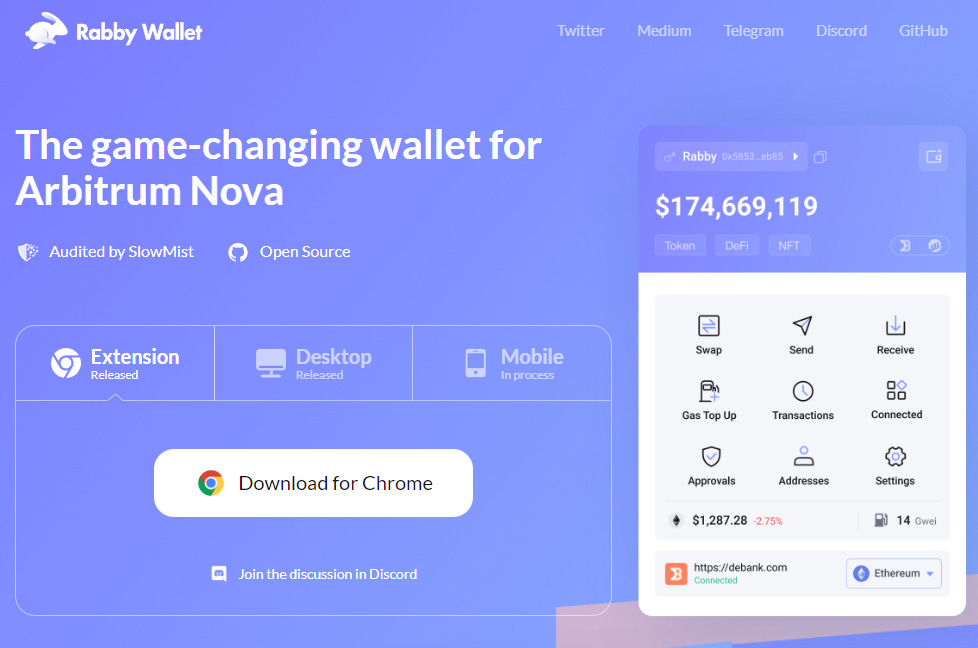
Okay, so check this out—I’ve been using Rabby in my browser workflows for months. It’s not perfect. But it’s one of the smoother extension experiences I’ve had. When I recommend it to friends I usually call it practical rather than hyped. A lot of wallets try to do everything. Rabby focuses on making the frequent tasks frictionless, and doing so with an eye for security. If you want to grab it quickly, here’s the official place to download rabby and try it yourself: rabby.
On the surface Rabby nails the basics — clean approval dialogs, per-site permissions, and a thoughtful token manager. But what really impressed me was the small stuff: clear gas presets that actually reflect network conditions, and a transaction guard that helps separate legit meta-transactions from sneaky approvals. At first I thought these were minor conveniences. But after walking through a few hasty DEX approvals, I realized they stop very real mistakes.
My instinct said extensions would never match hardware for security. That’s still true. Though actually, with the right UX, an extension can reduce user error so much that it becomes comparatively safer in day-to-day use for active traders. On one hand you have a cold wallet that will never sign a suspicious permit. On the other hand you have an extension that prevents you from approving nonsense in the first place. The middle ground matters.
Let me be candid: some aspects of browser wallet security make me nervous. Extensions run in the context of the browser. Malicious pages can attempt to trick you. And the ecosystem sometimes rewards developers for aesthetics rather than for rigorous threat modeling. But Rabby shows how threat modeling can be integrated into UX without scaring off novices. The warnings are clear, actionable, and not constantly nagging, which is a delicate balance.
Here’s a quick, practical mental checklist I use when evaluating any extension wallet. Short version first. Then I unpack it.
1) Permissions: What does the wallet ask from each site? 2) Transaction preview: Can I see the exact call data or at least a human-readable action? 3) Approval control: Does it let me cancel individual token approvals? 4) Network handling: Can I easily switch chains without trashing nonce flow? 5) Recovery and backups: Is seed handling clear and recoverable?
These are small questions, but they cluster into real-world outcomes. For example, a wallet that bundles approvals or hides call data leads people to approve blanket allowances. Those allowances get exploited. A wallet that forces per-site permission and shows approvals cleanly reduces that behavior. It’s not magic; it’s design.
One subtle point that surprises people: UX that respects beginner flow also helps power users. When approval dialogs are explicit and modular, automation scripts and bots can be safer. When a wallet provides clear logs and history, auditors get less grumpy. So the wins stack up.
Now some nitty-gritty that I think about often. I watch how wallets handle pending transactions. A stuck nonce can ruin a strategy. If the extension is mediocre, you get nonce clog, failed resubmits, and frustration. Rabby handles nonces in a pragmatic way — visible queues and manual bumping without forcing you into an arcane terminal. That feature alone has saved me hours. Seriously.
Another thing: token approvals. Many wallets still present «approve» as a binary. Rabby gives you more context and options. You can set allowance amounts or limit approvals. You can also see which dApps have permissions and revoke them without digging through a blockchain explorer. That kind of control is what I’d call explicit empowerment — and it changes behavior. People approve less when they understand they can revoke easily.
Hmm… I have to admit: I once left a large allowance open for a protocol I trusted, and then the protocol upgraded its contracts. Yikes. My first reaction was panic. Then I remembered the wallet had a revoke flow. It was a ten-minute cleanup instead of a multi-day headache. Stories like that aren’t rare. They’re everyday horror stories in DeFi. So the tools that give you quick remediation are the ones you end up trusting.
On the integration side, Rabby plays nice with browser tooling and dApps. Some wallets inject messy objects into the window and break pages. Rabby is less obtrusive. That matters when you’re juggling multiple dApp sessions. Also, for US-based traders who hop between a spreadsheet, a DEX, and a block explorer during market moves, the speed and predictability of an extension wallet often beats mobile apps for comfort and speed. I’m biased toward keyboard-driven workflows, though—so take that for what it’s worth.
Okay, some caveats. Rabby is still centrally developed software. You’re trusting maintainers and update channels. Extensions have update attack risks. For time-sensitive operations, I sometimes switch to a hardware wallet. On the flip side, the frequent updates and active community can mean faster mitigation of bugs than dormant projects. On one hand, updates can introduce regressions; on the other, they can patch exploits quickly. It’s a nuanced tradeoff.
Also, user behavior is the wildcard. You can build the most secure wallet in the world, but if someone pastes a seed phrase into a Discord PM, the wallet can’t help. Education is part of the stack. Rabby includes onboarding nudges that are useful, though not exhaustive. I’d like to see more beginner tutorials baked into the onboarding flow—interactive prompts, not just text — but that’s a product nitpick, not a dealbreaker.
Before I wrap up, some practical steps you can take today. Short list:
– Use per-site permissions; avoid blanket approvals whenever possible.
– Keep a small hot wallet for daily trades and a separate cold or hardware wallet for long-term holdings.
– Regularly audit and revoke token approvals; set calendar reminders if needed.
– Prefer wallets that show human-readable transaction summaries and let you control gas and nonce behaviors.
FAQ
Is a browser extension wallet safe enough for serious trading?
For day-to-day trading and interacting with DeFi, yes — if you choose a wallet with strong permission controls and careful UX. Combine that with good practices: small hot wallets, hardware for long-term storage, and regular approval audits. It’s not foolproof, but it’s practical.
Why not just use a hardware wallet always?
Hardware wallets are great for security but can be slow and cumbersome for frequent trades. The extension offers speed and convenience. I use both: hardware for big holds, extension for quick moves. On one hand convenience; on the other hand absolute security.
How do I reduce approval risks?
Grant limited allowances, revoke when done, and use wallets that show and manage approvals clearly. Also, avoid clicking unknown links and never paste your seed anywhere across the web. These are simple steps but they stop many common attacks.